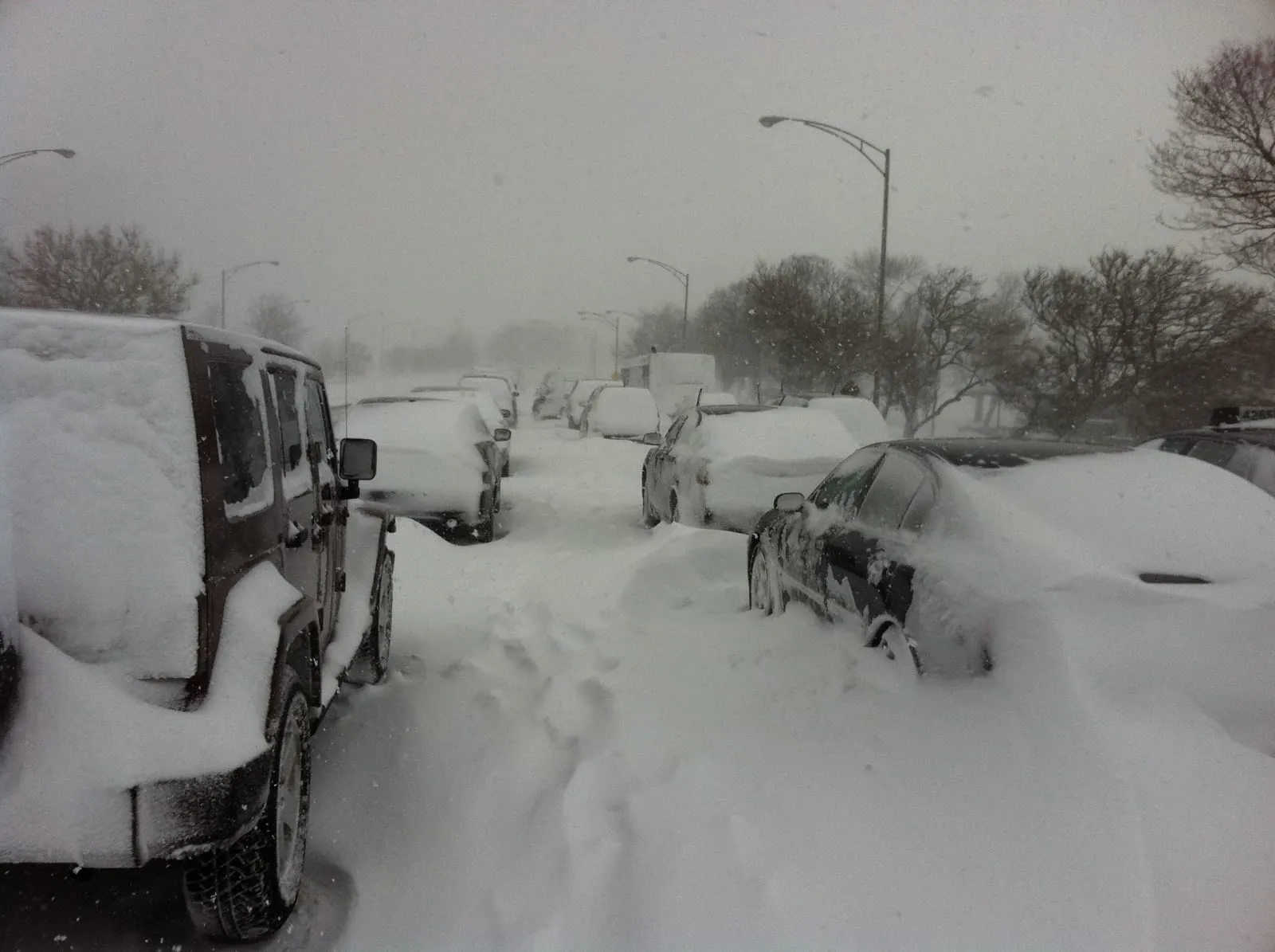

Quick answer: a ready-made kit like the AAA Severe Weather Road Kit covers most of what Illinois agencies recommend in one bag. Add the pieces it leaves out: jumper cables, a bag of sand or cat litter for traction, water, food and a phone charger. If you’d rather build your own, a compact car shovel, a sturdy ice scraper and a heat-reflective emergency blanket are the core.
Winter driving is one of the biggest cold-weather risks in Illinois. The Illinois Emergency Management Agency (IEMA) says winter driving conditions contribute to an average of nearly 29,000 vehicle crashes, more than 4,500 injuries and 80 deaths in the state each year [1]. Illinois averages five severe winter storms a year, and the state hasn’t gone a winter without at least one in the past century [1].
Why it matters in Illinois
- Winter-weather crashes a year
- Nearly 29,000 [1]
- Injuries and deaths a year
- More than 4,500 injuries, 80 deaths [1]
- Severe winter storms
- About five a year on average [1]
- Average snowfall
- About 37 inches in Rockford and Chicago, 6 to 10 inches at the southern tip [1]
- IDOT snowplow fleet
- More than 1,900 trucks for almost 45,000 lane miles [2]
What Illinois agencies say to carry
IEMA’s guide says to carry a winter storm survival kit even on short trips, because after a crash or breakdown you may wait several hours for help [1]. The lists from IDOT [2], IEMA [1] and Ready Illinois [3] overlap on these items:
- Warmth: blankets or sleeping bags, extra clothing to keep dry [1][3]
- Light and power: flashlight with extra batteries, phone and charger [1][3]
- Getting unstuck: shovel, windshield scraper and brush, sand or cat litter, tow rope, jumper cables [1][2]
- Being seen: flares or reflectors [2]
- Basics: water, high-calorie non-perishable food, first-aid kit [1][2][3]
How we chose
- Matches the official lists. Each pick covers items IDOT, IEMA or Ready Illinois name [1][2][3].
- Specs from the maker. We used the maker’s or brand’s own product page for contents, sizes and materials.
- Recall check. We searched the CPSC recall database on November 2, 2026, for each brand and model [8].
- Honest about gaps. No single kit covers every item, so we say what each one leaves out. We dropped a lithium jump starter we’d considered because we couldn’t confirm its current specs from the maker.
Our picks
Best for: One bag that covers most of the list
AAA Severe Weather Road Kit, 66 Piece (Lifeline 4390AAA)
It puts cold-weather gear, a folding shovel, an ice scraper, lights and a first-aid kit in one trunk bag, which covers a large share of what Illinois agencies recommend.
- 66 pieces: 45 first-aid supplies plus 18 winter emergency items [4]
- Includes ice scraper, fleece set, folding shovel, emergency blanket, hand warmers, fire striker, LED strobe light, 9-LED flashlight with batteries [4]
- Bag about 12 x 3 x 9 in.; 3.79 lb [4]
- 1-year limited manufacturer warranty [4]
Safety check: No safety certification applies. CPSC recall search found no recall for this kit, Lifeline or AAA road kits (checked 2026-11-02).
Watch out: AAA's listing doesn't include jumper cables, traction material, water or food, all of which IDOT or IEMA recommend. Add them yourself.
See it on Amazon → We chose it from specs and safety records; we haven't tested it ourselves.
Best for: Staying warm in a stalled car
SOL Emergency Blanket
A light, packable blanket you can keep in the glove box. The maker says it reflects 90% of body heat, and its bright orange color helps rescuers see you.
- 56 x 84 in.; 2.9 oz [5]
- Vacuum-metalized polyethylene; waterproof [5]
- Maker says it resists rips and won't shred if nicked [5]
Safety check: No safety certification applies. CPSC recall search found no recall for SOL or Survive Outdoors Longer (checked 2026-11-02).
Watch out: It traps heat but has no padding. Pair it with a real blanket or sleeping bag, which IEMA lists first [1].
See it on Amazon → We chose it from specs and safety records; we haven't tested it ourselves.
Best for: Digging out around tires and the tailpipe
Suncast 11 in. Telescoping Car Shovel (SCS450)
A shovel is on IEMA's kit list [1], and a full-size one won't fit most trunks. This one shortens to 30 inches for storage and has a D-grip that works with gloves.
- Extends from 30 in. to 38-1/4 in. [6]
- Blade 11 in. wide x 13 in. high [6]
- Button-lock slider made for gloved hands [6]
- Ribbed blade to resist snow sticking [6]
Safety check: No safety certification applies. CPSC recall search found no Suncast recall (checked 2026-11-02).
Watch out: The 11-inch blade is slow for big drifts. It's meant for clearing around a car, not a driveway.
See it on Amazon → We chose it from specs and safety records; we haven't tested it ourselves.
Best for: Clearing ice before you drive
Suncast Arched Ice Scraper with Chipper (SB14018)
IDOT says clearing snow and ice off your vehicle is the law [2]. The curved handle lifts your hand off the glass, and the chipper breaks up thick ice first.
- 11 in. long [7]
- About 4.5 to 4.9 in. scraper blade (the maker's page lists both) [7]
- Foam grip; built-in ice chipper [7]
Safety check: No safety certification applies. CPSC recall search found no Suncast recall (checked 2026-11-02).
Watch out: There's no brush, so you'll need something else to clear snow off the roof and hood.
See it on Amazon → We chose it from specs and safety records; we haven't tested it ourselves.
Buying guide
- Start with the gaps. Check any ready-made kit against the IDOT and IEMA lists above and add what’s missing. Jumper cables and traction material are the most common gaps [1][2].
- Pack for being stuck for hours. IEMA says help can take several hours to arrive [1]. Water, food and warm layers matter more than gadgets.
- Keep fuel up. IEMA says to refuel often and keep the tank near full to prevent ice in the tank and fuel lines [1].
- Check the kit each fall. Replace used first-aid items and batteries, and swap out old food and water.
If you’re stranded
IEMA’s guide says to pull as far off the road as you can, turn on your hazard lights, and tie a colored cloth (red if possible) to the antenna, window or door. Once the snow stops, raise the hood, and call for help if you have a phone. Stay in your vehicle, where rescuers are most likely to find you, unless you can see a building close by where you can shelter [1].
Sources
- Illinois Emergency Management Agency: Winter Weather Preparedness Guide
- Illinois Department of Transportation: Winter Driving Tips
- Ready Illinois (IEMA-OHS): With Winter Weather on the Horizon, IEMA-OHS Encourages Preparedness (Nov. 7, 2024)
- AAA Club Alliance shop: AAA Severe Weather Road Kit, 66 Piece (item 4390AAA)
- Survive Outdoors Longer: Emergency Blanket
- Suncast: 11 in. Telescoping Car Shovel (SCS450)
- Suncast: Arched Ice Scraper with Chipper (SB14018)
- U.S. Consumer Product Safety Commission: Recalls database (searched Nov. 2, 2026)
Common questions
What does IDOT say to keep in your car in winter?
The Illinois Department of Transportation lists jumper cables, flares or reflectors, windshield washer fluid, a small ice scraper, traction material, blankets, non-perishable food and a first-aid kit. Illinois emergency management also adds a phone charger, flashlight with extra batteries, water, extra clothing, a shovel and sand or cat litter.
What should I do if I'm stranded in my car in an Illinois snowstorm?
The state's winter guide says to stay in your vehicle, where rescuers are most likely to find you. Make sure the exhaust pipe is clear of snow, run the engine and heater about 10 minutes each hour, and open a window slightly while the engine runs.
Do I have to clear snow off my car in Illinois?
Yes. IDOT's winter driving page says to remove snow and ice from your vehicle before driving, and that it's the law.